A production plan that does not depend on one person.
A manufacturer of made-to-order pallets plans every order across 49 work centres. The order of work lived in the production director's head. We built a planner that proposes the plan, explains it and leaves the final word to the director.
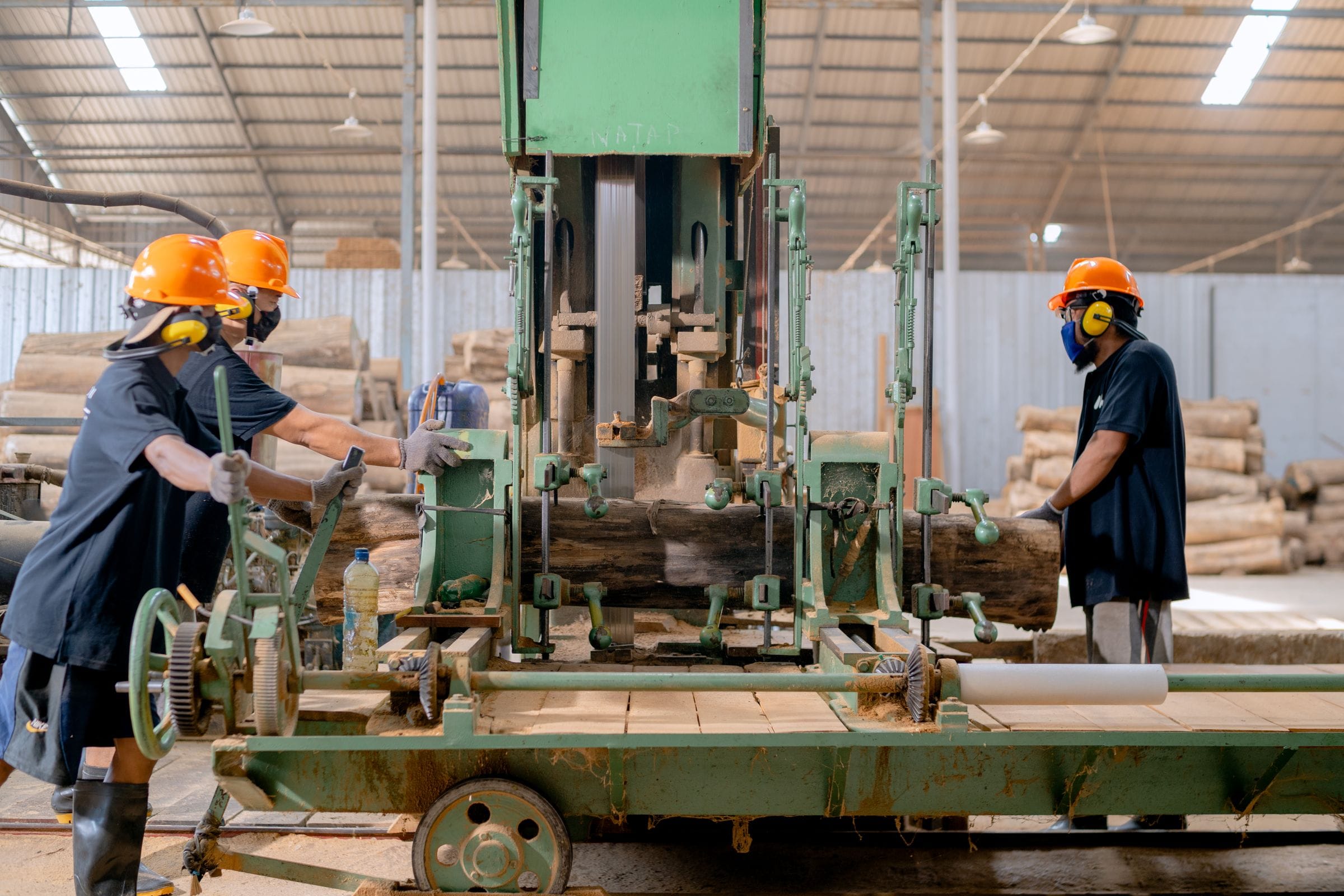 Case study – Pallet manufacturer
- 49work centres planned at once – lines, nailers, manual stations
- 1,000kinds of pallet
- 10,000kinds of timber in the catalogue
- 7,100stock cards
The problem
Forty-nine work centres, and the order of work in one head.
Every order has a loading date, every change of pallet size means rebuilding a line, and not every centre can make every pallet. The production director weighed all of it from memory.
Sales called all day to ask when pallets would be ready. When the director was away, the planning suffered.
The board
By hand, and by the planner.
The same twelve sample orders, planned twice: by hand, in the order they arrived, and by the planner – loading dates first, like pallets together. The figures show the difference.
- Changeovers
- 7
- Hours of changeover
- 14 h
- Late for their truck
- 4
- Time saved
- –
By hand, in the order the orders arrived: 4 miss their truck.
- Changeover · 2 h
- Changeover · 2 h
- Changeover · 2 h
- Changeover · 2 h
- Changeover · 2 h
- Changeover · 2 h
- Changeover · 2 h
Click a card to see why it sits where it does.
- Late for its truck
- Under 2 h to spare
- In time
What we built
The same board, with the plan proposed.
We rebuilt the plant's planning board one to one, so the director keeps the tool they know. The planning runs underneath it.
- 01
Automatic sequencing
Orders flow into the work-centre columns in the order that saves changeovers and keeps every loading date.
- 02
A proposal, not an order
The plan arrives as a suggestion – changeovers saved, late orders back on time. One click accepts it.
- 03
A reason for every card
Click a card and the planner says, in Czech, why it sits where it sits.
- 04
Delivery dates for sales
Sales sees where a new enquiry would fit in the plan and gets a date the plant can keep.
The rules it plans by
What the director knew, written down.
The planner follows the rules the director planned by – the ones that were never on paper.
- 01
Loading dates first
Every order is ready two to three days before its truck. The loading date decides before anything else does.
- 02
Like pallets together
Pallets of the same size and build run one after another, so the line is not rebuilt between them.
- 03
The right work centre
An order only goes where it can be made: small batches to manual stations, large ones to the lines.
- 04
Real hours, not ideal ones
Breaks, the night stop and drying time count. A stopped machine can be entered, and its column re-plans.
- 05
The better plant
If another plant would finish an order sooner, the planner says so and by how much. The director decides.
- 06
Hand changes stay
What the director fixes by hand stays fixed. The next plan works around it, not over it.
How it works
From the ERP to the board and back.
The planner works on the plant's own data and writes back where the plant already looks.
- 01
Orders in
Orders, stock and capacity come from the ERP the plant already uses.
- 02
Plan proposed
Loading dates first, like pallets together, only centres that can make them.
- 03
Confirmed by a person
The director accepts, moves a card or overrides a choice. Changes are kept.
- 04
Back to the plant
The confirmed plan goes where the floor and the ERP read it.
The result
Planning that works when the director is away.
The director no longer builds the plan from memory – they check a proposal and change what they know better. Every card shows why it is where it is.
When the director is away, the plant plans the same way. And sales promises delivery dates from the real plan.
The same approach works for
- Any plant where one person holds the production sequence in their head
- Make-to-order production with many variants and costly changeovers
- Delivery dates for sales, checked against the real plan
Contact
A similar problem on your desk? Let's look at it together.
Thirty minutes with a founder: your process, your data, and whether a system like this one would pay for itself in your plant.
Or reach us directly
- Matyáš ProkopiusCo-founder
- Adam BulkaCo-founder