Secure On-Prem LLMs: AI Without the Cloud Risks
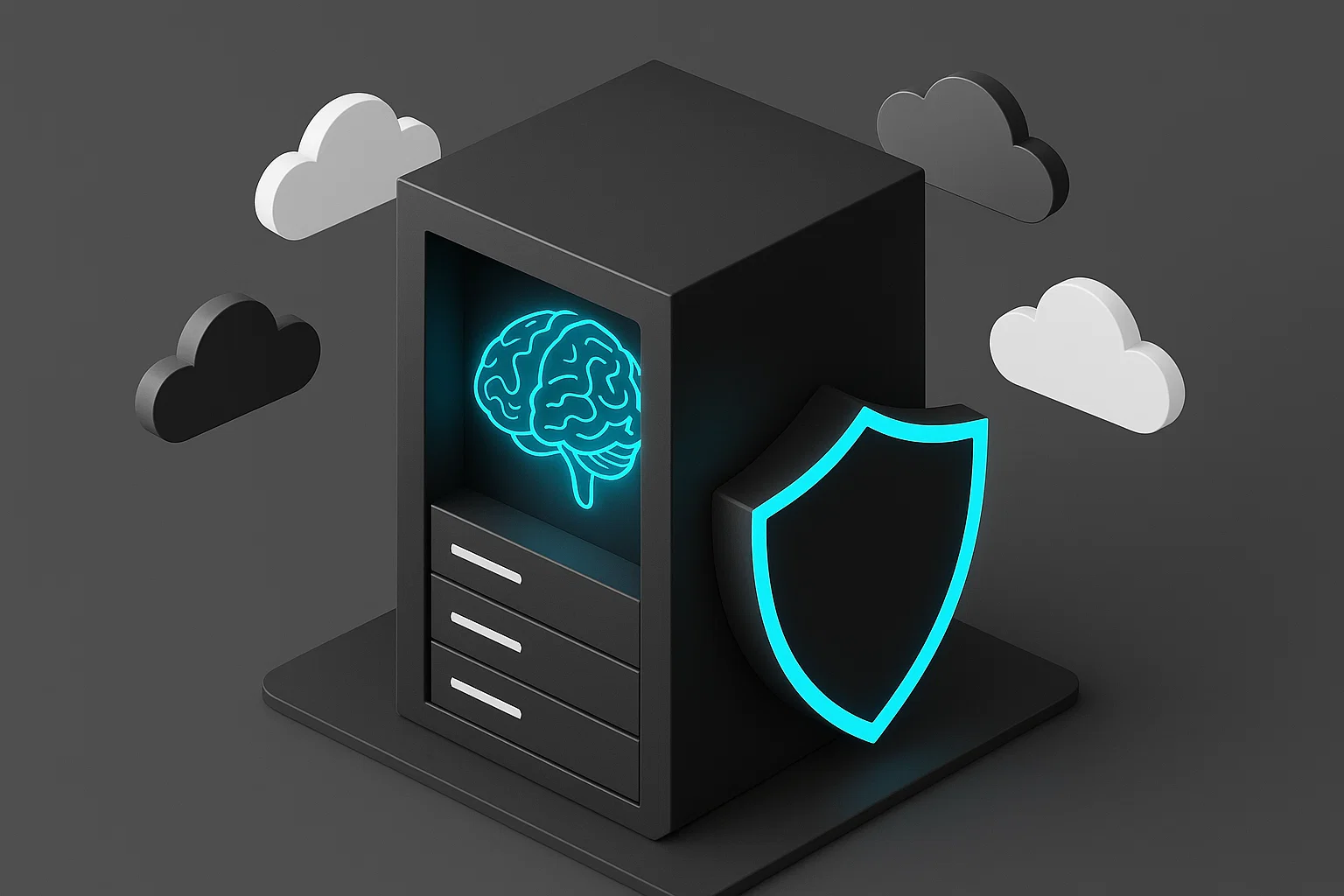
Imagine harnessing the power of advanced AI (like ChatGPT) without ever sending your confidential data to the cloud. For many enterprises, especially those in regulated industries, this isn’t just a fantasy but a necessity. Secure on-premises large language models (LLMs) offer exactly that: cutting-edge AI capabilities delivered within your own infrastructure. In this article, we’ll explore why on-prem LLMs matter for companies concerned about data security, GDPR compliance, and control. We’ll also show how SURG Solutions (a provider of tailored enterprise AI and data solutions) enables organizations to deploy private, offline AI models without the cloud risks.
The Cloud AI Dilemma for Enterprises
Enterprise leaders are eager to leverage AI for automation, insights, and competitive advantage. However, cloud-based AI services (like public GPT APIs or SaaS AI tools) come with serious concerns around data privacy and compliance. When you use a cloud AI, any data you input - from customer information to proprietary documents - leaves your company’s secure environment and goes to third-party servers. This loss of control over sensitive data raises the risk of leaks and unauthorized access. In one high-profile case, Samsung had to ban employees from using ChatGPT after discovering that staff accidentally uploaded confidential source code to the AI, creating a potential leak of trade secrets. Incidents like this highlight why CIOs and CISOs hesitate to embrace cloud AI if it means giving up data sovereignty.
Regulatory compliance adds another layer of complexity. Laws such as GDPR in Europe strictly regulate how personal data is handled and where it’s allowed to travel. Relying on cloud AI can lead to violations if user data or personal information is sent to external servers without proper safeguards. In fact, European regulators have scrutinized services like ChatGPT over how they collect and process personal data. For banks, healthcare providers, government agencies, and others in regulated sectors, using a U.S.-based cloud AI service could conflict with data residency requirements and audit trails needed for compliance. The cloud convenience simply may not be worth the legal and security risks in these cases.
Beyond privacy and compliance, cloud AI platforms can lock enterprises into specific vendors. Adopting a popular cloud ML API might seem quick, but over time you risk vendor lock-in - where moving to an alternative becomes costly and cumbersome. Additionally, cloud AI usage costs can spiral unpredictably as your usage grows (think of paying per API call or per token of text generated). And if the service goes down or changes its terms, your AI capabilities could be disrupted. These challenges form a cloud AI dilemma: the lure of powerful AI vs. the potential downsides of handing over data and control.
What Are On-Prem LLMs (AI Under Your Roof)?
On-premises LLMs are large language model AI systems that run entirely on infrastructure controlled by your organization - essentially AI on your own “turf” rather than someone else’s cloud. In practical terms, an on-prem LLM could be a powerful AI model (such as GPT-style or open-source models like LLaMA 2) deployed on your company’s servers or private data center. All the processing and data storage happens locally, within your firewall, instead of via an internet API call to a distant cloud service.
By keeping the AI in-house, enterprises retain full control over the model and the data it sees. You decide which model to use or fine-tune (it could be an open-source model or a licensed proprietary one), and you can customize it to your industry or business needs. Because the AI runs on hardware you manage (or a trusted on-prem cluster), no sensitive information ever leaves your network during the AI processing. It’s like having the smarts of a cloud AI, but contained in your own secure environment.
For example, instead of sending confidential documents to an external AI for analysis, you could have a local LLM that reads and summarizes those documents internally. The technology behind on-prem LLMs has advanced rapidly - with more efficient models and hardware - making it feasible for enterprises to host AI that was once only available via big tech clouds. Essentially, on-prem LLM deployment brings the brains of generative AI into your own data center, combining the power of modern AI with the privacy of local computing. This offers a new path for companies that want AI benefits without compromising on security.
Why Security-Conscious Companies Prefer On-Prem AI
Adopting on-prem LLMs can address the very challenges that hold businesses back from cloud AI. Here are key benefits, especially for security-conscious and compliance-driven organizations:
Data Privacy & Sovereignty: With on-prem LLMs, all processing happens within your controlled environment. Sensitive inputs like financial records, customer data, or intellectual property never travel over the public internet. This drastically reduces the risk of data leakage because there’s no third-party handling your data. Companies maintain data sovereignty - meaning data stays under national/jurisdictional control as required. For instance, a hospital running an LLM on-prem can ensure patient records remain on its own servers, aiding HIPAA or GDPR compliance, as nothing is sent to an outside cloud.
Regulatory Compliance: Hosting AI models internally makes it much easier to comply with regulations such as GDPR in the EU, HIPAA in healthcare, or other data protection laws. Since personal or sensitive data isn’t shared with external vendors, enterprises can avoid many legal pitfalls. You can enforce strict access controls and keep detailed audit logs of every AI interaction. In the event of an audit, you have full transparency over where data resides and how it’s used. This level of control is crucial for industries like finance or government that have to demonstrate compliance at all times.
Security & Access Control: On-prem deployment means your own IT team (or a trusted integration partner like SURG Solutions) manages the environment. This allows implementation of robust security measures: encryption of data at rest and in transit within your network, role-based access controls for who can use the AI, and monitoring of usage. There’s also a smaller attack surface – no need to worry about securing data as it travels to a cloud API or gets stored on an external server. Companies can even run LLMs in completely isolated networks if needed for maximum security. The result is an AI solution that aligns with your enterprise security policies and risk tolerance.
Avoiding Vendor Lock-In: Running your own LLM means you’re not tied to any single cloud provider’s ecosystem. You have the flexibility to choose or even switch models (open-source or otherwise) based on what suits your business - without being stuck with a vendor’s pricing or limitations. This autonomy can be a strategic advantage: you control when to update models, how to fine-tune them, and you aren’t at the mercy of external API changes or outages. Over the long run, this reduces dependency and potentially lowers costs. Many enterprises find that while an on-prem setup has upfront costs (hardware, setup effort), it can become more cost-effective at scale than paying usage fees to a cloud AI provider indefinitely.
Performance & Continuity: Because the AI is running locally, you can optimize performance for your needs. There’s no network latency to an external server, which is beneficial for applications needing quick responses or operating in locations with limited internet. Even if the internet goes down, your on-prem AI keeps working (useful for remote sites or edge use cases). Moreover, you have full visibility into the system’s performance and can tune it as needed – something hard to do with opaque cloud services. All this contributes to more reliable, predictable AI operations, which business leaders prefer when AI is supporting critical decisions or customer services.
In short, on-prem LLMs let enterprises enjoy AI innovation without sleeping with one eye open worrying about where their data is going. For any company that values security, privacy, and compliance, this approach delivers “best of both worlds” - advanced AI capabilities under your strict oversight.
AI Without the Cloud: Capabilities of On-Prem LLMs
A common misconception is that if you keep AI off the cloud, you’ll lose out on the latest features or knowledge. In reality, on-prem LLMs can offer the same cutting-edge capabilities as cloud AI – from natural language understanding to content generation - but tuned to your proprietary data. Modern open-source LLMs and licensed models are highly sophisticated, and when deployed on high-performance local servers (often with GPUs), they can handle a range of enterprise tasks.
One powerful application is building document chatbots and internal knowledge assistants. Imagine an AI chatbot that can instantly answer your employees’ questions by drawing from your company’s internal knowledge base (policy documents, manuals, reports), yet never leaks that knowledge externally. Using on-prem LLMs combined with Retrieval-Augmented Generation (RAG) techniques, this is completely achievable. RAG means the AI model is augmented by a retrieval system that fetches relevant data from your approved sources to produce accurate, context-rich answers. Even on-prem, an LLM can be connected to your internal databases or document repositories, allowing it to provide precise answers with citations from your own data - all while that data stays within your firewall. For example, a legal department could have an AI assistant that references only the firm’s internal contract library and case files to help draft clauses or answer legal questions, with zero cloud dependency.
Another use case is in automation and decision support. On-prem LLMs can be integrated into enterprise software workflows – from summarizing incoming reports, to drafting responses, to analyzing logs for insights. Since SURG Solutions also specializes in big data integration and automation pipelines, they can connect your on-prem LLM to data streams and business systems. The AI could summarize a weekly sales report, help HR draft policy updates, or assist engineers in troubleshooting – all in a controlled environment. Because the model can be fine-tuned to your industry jargon and specifics (something cloud AI won’t do out-of-the-box with your niche data), the outputs become even more relevant. This tailored training is possible safely on-prem, since you can use your proprietary data for fine-tuning without exposing it to an external party.
It’s also worth noting that running AI on-prem doesn’t mean working in a vacuum. You can still update your model with the latest advancements – for instance, deploying newer open-source model versions or applying patches - on your own schedule. The capabilities of your on-prem LLM solution can evolve, but always under your control. In effect, you get all the benefits of generative AI (like natural language Q&A, summaries, generation of drafts, intelligent search through RAG) in a way that’s purpose-built for your enterprise.
Bringing On-Prem LLMs to Life (Challenges and Solutions)
Deploying a large language model within your own infrastructure does require planning and expertise. Enterprises must consider hardware (GPUs or high-performance servers to run the model efficiently), software (frameworks for serving the model, like specialized inference engines), and integration (connecting the AI to your applications and data). There’s also the need for maintenance – updating models, monitoring usage, and ensuring security patches are applied. These challenges can seem daunting if your team hasn’t managed AI infrastructure before.
This is where partnering with experts like SURG Solutions makes a difference. SURG Solutions is a Czech AI company providing tailored AI and data solutions for enterprises – including secure on-prem LLM deployments. Our team has experience in setting up the entire pipeline: from selecting the right model (e.g., an open-source LLM that suits your needs) to optimizing it for your hardware and integrating it with your existing systems. We handle the heavy lifting of big data integration and automation pipelines, ensuring your on-prem AI can seamlessly pull in internal data and feed outputs into your workflows. Because we design custom AI systems for each client, the on-prem LLM we deliver isn’t a one-size-fits-all box, but a solution tailored to your industry context and requirements.
Security is paramount in these projects. SURG Solutions helps implement strict access controls, so only authorized applications or users can query the LLM. We also set up monitoring and logging, giving your IT and security teams full visibility into how the AI is used – aligning with your governance policies. If needed, we can configure the system to operate in an air-gapped environment (completely offline from the internet) for maximum isolation. And since everything is on-prem, we ensure compliance measures are in place, from encryption of data to audit trails for each AI interaction.
Another advantage of an expert partner is guidance on scalability and cost-efficiency. We help you estimate the computing resources needed so that the AI runs smoothly without excessive cost. Over time, as your usage grows, we can adjust the infrastructure or deploy optimizations (like model compression or batching techniques) to keep things efficient. Unlike a cloud service where costs might spike unpredictably, an on-prem setup under our stewardship gives you a more predictable cost structure.
In summary, while implementing an on-premises LLM comes with complexity, the right expertise and planning turn it into a manageable, high-ROI project. SURG Solutions prides itself on making this journey smooth for enterprise clients – letting you focus on reaping the benefits of AI, while we handle the technical intricacies. The result is a secure, compliant AI system delivering real business value, without the cloud anxieties.
Conclusion: Gaining AI’s Benefits Without the Risks
Modern enterprises shouldn’t have to choose between innovation and security. Secure on-prem LLMs offer a balanced path: you get the transformative power of AI – faster decisions, automated workflows, insightful analytics - and you keep full control of your data. For companies that deal with sensitive information or operate under strict regulations, this approach unlocks AI opportunities that were previously off-limits due to cloud risks. In a time when data breaches and privacy fines can severely harm a business, having an AI that works for you alone is not just comforting, it’s a competitive advantage.
Companies that adopt private, compliant AI solutions gain efficiency and peace of mind, positioning themselves a step ahead in the market. With SURG Solutions as your partner, deploying an on-premises LLM is no longer a daunting task but a strategic initiative we can execute together. Our expertise in enterprise AI - from machine learning models to RAG-enhanced knowledge systems – ensures that your tailored AI solution is robust, secure, and effective from day one.
If you’re considering where to start with secure AI, SURG Solutions can help. We’ll guide you in harnessing cutting-edge AI capabilities without the cloud’s risks, so you can innovate confidently within your own safeguarded domain. Embrace the future of AI on your terms and watch your enterprise thrive with efficiency, security, and a competitive edge.
Summary
Secure on-premises LLMs (large language models) give enterprises the power of advanced AI without exposing sensitive data to the cloud. Unlike cloud AI, they eliminate risks like data leaks, vendor lock-in, and GDPR violations. Running models locally means full control, stronger security, and easier compliance. SURG Solutions helps companies deploy tailored on-prem LLMs and RAG systems, turning AI into a secure, high-value business asset.
Sources
Gartner (2023). Survey: 80% of AI Projects Will Remain Alchemy Through 2025.
Samsung (2023). Samsung Bans Use of ChatGPT for Employees After Sensitive Data Leak. The Guardian.
TechCrunch (2023). Italy Temporarily Bans ChatGPT Citing GDPR Concerns.
McKinsey & Company (2023). The State of AI in 2023: Generative AI’s Breakout Year.
IBM (2022). Cost of a Data Breach Report.