The Hidden Costs of Manual Processes in Enterprises: Wasting Time and Money
Manual processes might seem “good enough,” but they are quietly draining your enterprise’s time, money, and opportunities. Day by day, repetitive paperwork, data re-entry, and slow approvals chip away at productivity. In fact, employees can spend up to half of their workday on routine tasks that could be automated. These hidden inefficiencies erode profit margins and frustrate both employees and customers. This article reveals the often-unseen costs of sticking with manual workflows – from duplication and errors to delays and lost productivity – and shows how AI and automation can recapture that lost value.
Redundant Work and Duplication – Wasted Labor Hours
One of the biggest hidden costs of manual processes is the sheer waste of employee time on redundant work. In many companies, staff copy data between systems, re-enter the same information multiple times, or perform routine tasks by hand that add little value. All this duplication of effort quietly eats into working hours. According to research, as much as 60% of an employee’s time in a manual workflow may be spent on duplicating tasks. This means over half the day is lost to low-value busywork instead of strategic projects. The labor cost of these wasted hours is huge – in a 1,000-employee organization, time inefficiencies can equate to around $10 million in productivity lost per year (assuming each employee wastes 20% of their time and earns $50/hour). That’s a direct hit to the bottom line from work that produces no real output.
Solution: AI and automation eliminate duplicate work by integrating systems and streamlining workflows. Instead of staff manually transferring data between siloed spreadsheets and apps, an automated data pipeline or integration can ensure information flows where it needs to go without human re-entry. For example, connecting your CRM, ERP, and invoicing system can remove the need to copy-paste customer or order details repeatedly. Intelligent automation tools can also handle routine tasks (like sending status update emails or generating weekly reports) on their own. By deploying custom AI systems or RPA (robotic process automation) bots, enterprises free employees from the tedium of data shuffling. This not only reduces labor costs, but also lets your talent focus on high-value activities that drive innovation and revenue.
Human Error – The Expensive Cost of Manual Tasks
To err is human – and when processes are manual, errors are inevitable. Typos in spreadsheets, misplaced decimals in calculations, forgotten follow-ups or lost documents can all wreak havoc. These mistakes carry heavy hidden costs: work has to be redone, shipments get delayed, financial reports become inaccurate, or compliance issues arise. Cumulatively, human error in manual workflows costs U.S. businesses an estimated $37 billion annually. Every time an employee has to fix an error or track down a discrepancy, that’s extra time and money spent. Worse, errors can damage customer trust – think of a client receiving the wrong invoice or a critical order fulfilled incorrectly due to a data entry slip-up. In tightly regulated industries, a simple clerical error might even result in fines or legal penalties.
Solution: Automating processes drastically reduces the risk of mistakes. Unlike people, computers don’t get tired or distracted. Automated systems follow predefined rules every time, ensuring consistency and accuracy. For instance, an AI-driven document processing tool can extract and validate data from forms with near-perfect accuracy, avoiding the 18–40% error rates that manual data entry can have. Workflow software can automatically route tasks to the right person, so nothing falls through the cracks. In finance, robotic automation can double-check calculations and flag anomalies before a payment goes out. Enterprises that implement workflow automation have cut error rates by up to 50%, immediately saving the costs of rework and preventing issues before they escalate. By ensuring data integrity and consistency, AI and automation not only save money but also protect your company’s reputation.
Slow Approvals and Delays – Bottlenecks That Stall Business
Manual processes often involve slow, linear hand-offs – think of a paper form circulating via interoffice mail for signatures, or an email request waiting in a busy manager’s inbox. These slow approvals and communications create bottlenecks that ripple across the business. Projects get delayed waiting for go-aheads, sales deals stall while contracts crawl through manual review, and everyday decisions take far longer than they should. In a fast-paced market, these delays are costly. Delayed approvals and inefficient communication frustrate customers and result in lost opportunities and revenue. A client waiting on a quote or an urgent service request that’s stuck in bureaucracy might just turn to a competitor. In fact, customer experience research by Accenture found that 52% of consumers have switched service providers due to poor or slow service, leading to an estimated $1.6 trillion in lost business. Slow processes on the inside translate to frustration and churn on the outside.
Solution: The key is to remove manual bottlenecks by digitizing and automating workflow steps. By moving from paper and email-based approvals to streamlined digital workflows, decisions that once took days can happen in minutes. For example, an automated approval system can instantly route a request to the correct manager’s dashboard or mobile app, send reminders if it sits too long, and even auto-approve routine items based on predefined rules. Paperless workflows not only speed up approvals but also provide transparency – anyone can check the status in real time, rather than sending “Just checking in” emails. AI can further optimize the flow: imagine a smart system that prioritizes approvals that are at risk of missing deadlines, or an AI assistant that gathers all supporting documents for the approver to review in one click. The result is faster turnaround on everything from purchase orders to customer support escalations. Businesses that embrace such automation see fewer missed deadlines and higher customer satisfaction, as work moves efficiently without getting stuck in someone’s inbox. In the big picture, faster processes mean you can seize opportunities quickly – closing deals, responding to market changes, and delighting customers with prompt service.
Low Productivity – The Opportunity Cost of Inefficiency
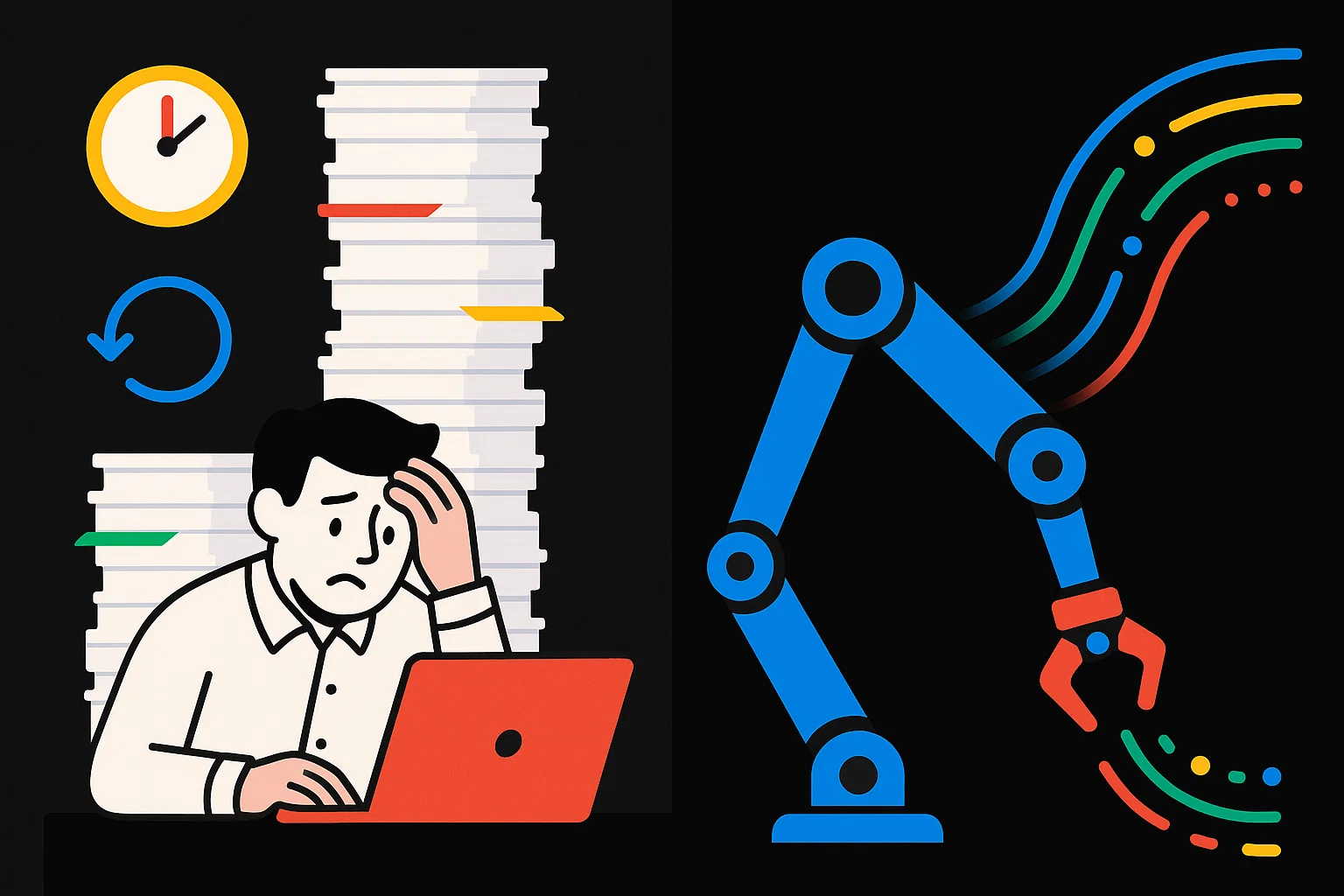
Perhaps the most damaging hidden cost of all is the opportunity cost of low productivity. When talented employees spend a large chunk of their day on mundane manual tasks, it’s not just their time being wasted – it’s the missed opportunity to have them drive growth and innovation. Surveys show the average knowledge worker might spend 3–4 hours per day on busywork that could be automated, effectively losing nearly half their productive capacity. Additionally, employees often waste time simply dealing with the chaos of unoptimized processes – for example, searching for information scattered across emails and folders. A McKinsey study found staff spend about 20% of their time just searching for and gathering information in disorganized workflows. This lost time adds up: one analysis calculated a 1,000-employee firm could be forfeiting on the order of $10 million per year in productivity because of these inefficiencies. Beyond the dollars, there’s a human cost: highly skilled team members feel underutilized and frustrated when their days are eaten by drudgery. This can hurt morale and even lead to higher turnover rates in companies with persistently inefficient processes - incurring yet more costs to recruit and train replacements.
Solution: Modern AI and automation technologies are like a productivity booster for your enterprise, handing back those lost hours. By automating repetitive work, you enable employees to refocus on strategic, creative, or analytical tasks that genuinely require human insight. The ROI on such productivity gains is dramatic – automation can cut operational costs by up to 30% according to McKinsey, precisely because work gets done faster and with fewer resources. Let’s look at a few practical examples of how AI-driven automation can supercharge productivity:
Automated Reporting: Instead of analysts spending days pulling data and formatting reports, an AI-powered system can compile dashboards and generate reports in seconds. For instance, a sales report that once took hours of Excel work can be delivered at a click, with errors eliminated.
Predictive Planning: Manual planning often relies on guesswork and endless spreadsheet updates. AI models can analyze historical data to forecast demand or sales, helping managers make quicker, data-backed decisions on inventory, staffing, or budgeting. This not only saves time but also improves accuracy, reducing the costs of over- or under-estimating needs.
Paperless Workflows: Replacing physical paperwork (like expense forms, contract sign-offs, or HR onboarding documents) with digital forms and e-signatures speeds up cycles dramatically. No more printing, scanning, or chasing signatures – a digital workflow moves instantly and creates an audit trail automatically.
Intelligent Knowledge Management: Instead of each employee manually searching through emails or intranets for information, companies can deploy AI assistants (using retrieval-augmented generation, for example) that let staff query a knowledge base and get instant answers. This means when someone needs the latest pricing sheet or a past project report, they get it in seconds, not hours, boosting their effective productivity.
By implementing solutions like the above – often custom-tailored to an enterprise’s specific needs – companies unlock significant business value. The same hours that were once spent on drudgery can now be invested in serving customers, improving products, and strategizing for the future. Employees become more engaged when they can apply their skills to meaningful work, and that morale boost further amplifies productivity and creativity. In short, automation doesn’t replace your workforce – it augments it, allowing your team to accomplish far more than before.
ROI and Business Impact of Automating Manual Processes
Addressing manual inefficiencies isn’t just an IT improvement project – it’s a strategic move that delivers a high return on investment. The business impact of AI and automation can be felt in hard dollars saved and in competitive edge gained. On the cost side, we’ve seen how eliminating errors, delays, and wasted labor directly saves money. Studies confirm that organizations leveraging automation save 20–30% in operational costs on average Some businesses even report achieving a 240% ROI on process automation within the first year, quickly recouping their investment as efficiency soars. These savings go straight to the bottom line.
Beyond cost reduction, automation brings agility and insights that drive revenue growth. Processes that once took days now finish in hours, meaning companies can do more with the same resources. Faster cycle times can improve customer satisfaction (translating to repeat business and referrals) and enable your enterprise to grab market opportunities before competitors. There’s a reason 84% of company leaders believe AI provides a competitive advantage in their industry - it allows businesses to operate smarter and respond quicker. Automation and AI also generate rich data and analytics as by-products of digitized workflows, which managers can use to spot trends, monitor performance in real time, and continually optimize operations. This data-driven continuous improvement simply isn’t possible when information is locked in paper files or disparate manual logs.
It’s worth noting that modern AI solutions have matured to meet enterprise needs around security and customization. Worried that automation means handing data to third-party cloud services? Solutions now exist for on-premises AI and private large language models that run securely within your own environment, so you can automate while keeping sensitive data in-house. And far from being “one-size-fits-all,” today’s AI and machine learning can be tailored to your specific industry workflows – whether it’s a predictive maintenance model for manufacturing or a custom NLP solution that understands your company’s jargon. With the right implementation partner, the technology adapts to your business, not the other way around.
Conclusion and Next Steps
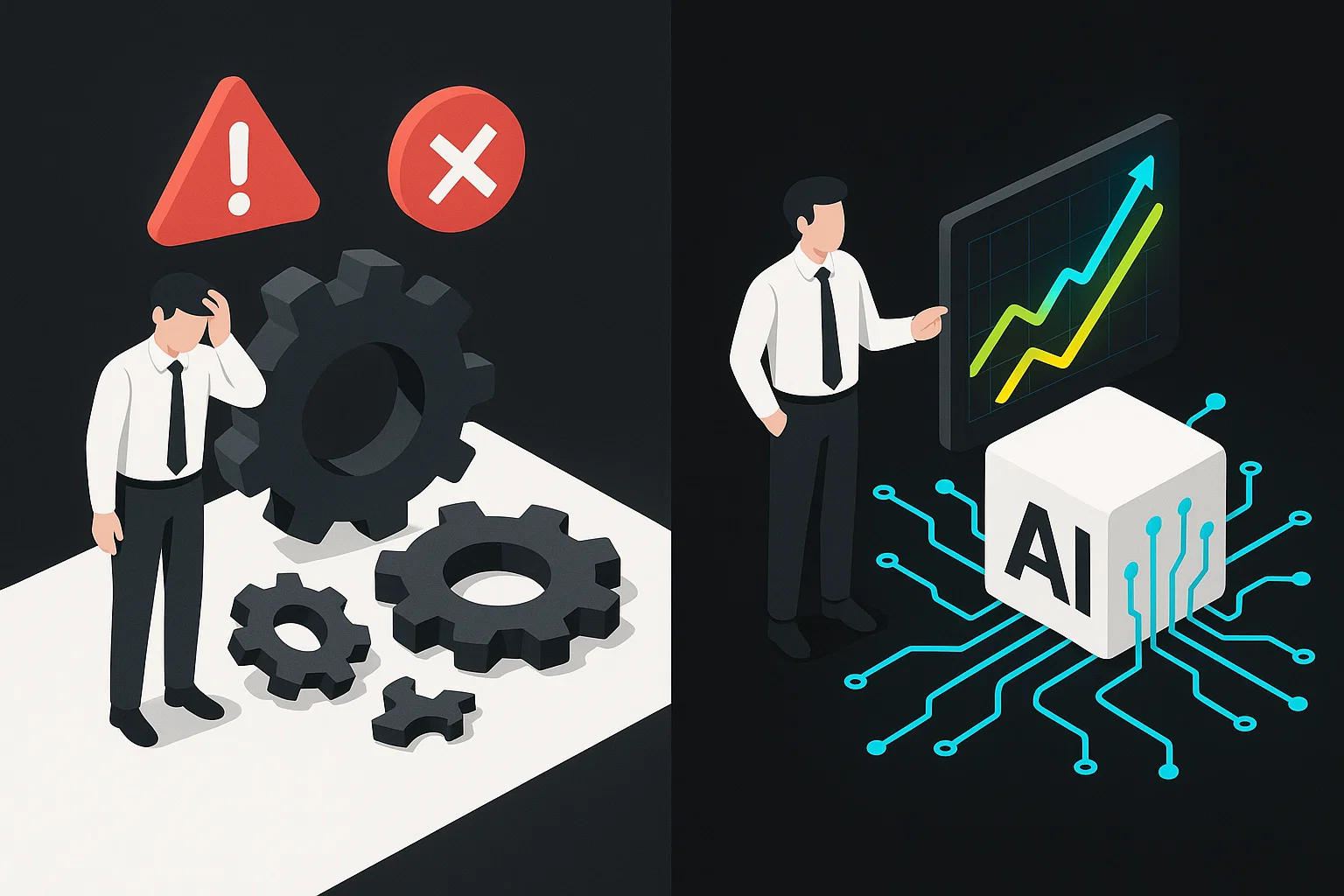
The hidden costs of manual processes (from wasted time and labor, to errors, delays, and missed opportunities) can quietly drain an enterprise’s resources and hold it back from its full potential. In contrast, companies that embrace AI and automation gain efficiency, accuracy, and speed, translating to real dollars saved and earned. They also empower their employees to focus on impactful work, all while improving security and compliance through better controls. In today’s competitive landscape, removing these inefficiencies isn’t just about saving a few hours here and there; it’s about building a nimble, data-driven organization ready to outperform peers. Enterprises that modernize their processes now will reap the rewards of higher productivity, lower operational costs, and stronger growth in the years ahead.
If you’re considering where to start, SURG Solutions can help. We specialize in crafting tailored AI and data solutions (from automated machine learning systems and big-data integration pipelines to secure on-premise LLMs and intelligent knowledge management (RAG) systems) all designed to address the challenges discussed above. Adopting modern AI solutions can seem complex, but with the right partner it becomes a strategic, manageable journey. Businesses that proactively streamline their manual processes not only save time and money, but also gain agility, security and a competitive edge. Don’t let hidden inefficiencies continue to silently erode your enterprise. The path to a more efficient, profitable, and innovative operation is clear – and we’re here to guide you every step of the way.
Summary
Manual processes may appear harmless, but they quietly drain enterprises of both time and money. Hidden costs include duplicated work, human errors, slow approvals, and reduced productivity. Employees can lose hours each day to repetitive tasks, errors can cost millions, and delays frustrate customers. By adopting AI and automation (such as automated reporting, predictive planning, and paperless workflows) companies can reduce inefficiencies, lower operational costs by 20–30%, and achieve rapid ROI. Beyond cost savings, automation empowers employees, improves accuracy, and gives enterprises the agility to outperform competitors.
Sources
McKinsey (2021). The State of AI in 2021.
Accenture (2018). The Cost of Poor Customer Service.
WorkMarket/ADP (2018). Productivity Report.
Forrester (2020). The Total Economic Impact™ of Automation.